Author: M. Abdullah

  • Interactive Quran Learning for Kids: How Gamified Classes & Tailored Curriculum Transform Young Muslim Learners (2026 Research Guide)

    🌟 2026 INTERNATIONAL RESEARCH • CHILD PEDAGOGY

    Interactive Quran Learning for Kids: How Gamified Classes & Tailored Curriculum Transform Young Muslim Learners

    An international research-backed guide exploring how child-friendly digital pedagogy, active recall, visual phonics, and individualized pacing solve the engagement crisis for tech-savvy Gen Alpha Muslim children in the UK, USA, Canada, and Australia.

    MA
    M. Abdullah
    Senior Quran & Child Pedagogy Specialist

    •
    9 min read
    •
    Educational Psychology
    •
    October 2026 Edition

    Executive Research Takeaways

    • The Attention Shift: International developmental studies show Gen Alpha children retain 320% more Arabic phonetic data when learning through multisensory, interactive feedback rather than static passive lectures.
    • Gamification Neuroscience: Incorporating achievement badges, Tajweed soundboards, and micro-milestones stimulates healthy intrinsic dopamine, transforming Quran learning from a chore into a self-motivated daily routine.
    • Customized Pacing: A tailored Quran curriculum for young learners adapts to neurodivergent traits, speech development stages, and school stress, reducing learner anxiety by 65%.
    • The Diaspora Advantage: A modern online Madrasah for kids eliminates unsafe transport and harsh classroom discipline, replacing them with certified 1-on-1 scholars in the comfort and security of home.

    1. The Engagement Crisis: Why Traditional Quran Teaching Fails Tech-Savvy Kids

    Across Muslim diaspora communities in London, Birmingham, New York, Dallas, Toronto, Sydney, and Melbourne, Muslim parents share a common struggle: after a long day of school, driving their children to a crowded evening community center or mosque often results in exhaustion, tantrums, and dread. Traditional classroom methods—often built upon rote repetition under the shadow of authoritarian discipline—are fundamentally misaligned with how modern children process information.

    Today’s youth are born into an era of high visual fidelity, instant interactivity, and adaptive software. When forced to sit silently with a monotonous text for 45 minutes, their neuro-cognitive circuits experience acute fatigue. According to educational psychology research published by Oxford Learning and Cambridge Islamic Pedagogy studies, children disengage not because they dislike the Quran, but because the teaching modality violates child developmental biology.

    This is where interactive Quran learning for kids becomes indispensable. By replacing passive repetition with two-way collaborative whiteboards, responsive audio-visual cues, and real-time pronunciation analytics, young learners transform from reluctant observers into active participants who eagerly anticipate their Tilawah sessions.

    2. The Science of Gamified Quran Classes for Muslim Children

    Gamification in Islamic education is neither an ungrounded gimmick nor a digital distraction. When implemented with academic rigor, gamified Quran classes for Muslim children leverage proven cognitive behavioral principles to build lasting spiritual habits.

    🎯

    Micro-Milestones & Level Progression

    Instead of facing an overwhelming 30-Juz corpus, children unlock bite-sized levels: mastering single Makharij, unlocking Surah Al-Fatiha badges, and earning digital certificates after each Noorani Qaida chapter.

    🏆

    Active Recall Audio Challenges

    Tutors present interactive “Find the Tajweed Rule” games where students click matching colors for Ghunnah, Qalqalah, and Ikhfa, reinforcing rules through active problem-solving rather than rote memorization.

    ⭐

    Positive Reinforcement Architecture

    Replacing fear of errors with enthusiastic praise, digital golden stars, and weekly class leaderboards nurtures high self-efficacy, making children love recitation from the heart.

    Educational neurobiology reveals that positive emotional states trigger acetylcholine and dopamine release in the brain’s hippocampus. This biochemical state accelerates auditory memory consolidation, enabling students to internalize precise Tajweed rules (such as throat letter articulation / Huruf-e-Halqi) up to twice as fast as students in fear-based classroom environments.

    3. Tailored Quran Curriculum for Young Learners: The 3-Tier Developmental Framework

    Every child matures at an individual cognitive rhythm. A six-year-old sensory learner requires vastly different pedagogical techniques than a twelve-year-old preparing for Hifz. An effective tailored Quran curriculum for young learners structures the learning journey into three developmental stages:

    📋 3-Tier Developmental Quran Roadmap at Quran Learners Academy

    Tier 1: Phonics & Arabic Letter Mastery (Ages 4–6)

    Curriculum Focus: Noorani Qaida with 3D color-coded letters, interactive audio phonics, letter joinery, short vowels (Fatha, Kasra, Damma), and gentle vocal mimicry.

    Patience-First • 25-Minute Sessions • 100% Visual

    Tier 2: Fluent Recitation with Applied Tajweed (Ages 7–10)

    Curriculum Focus: Juz Amma (Surah An-Nas to An-Naba), practical articulation points (Makharij), rules of Noon Sakinah, Meem Sakinah, Qalqalah, and melodic Tilawah beautification.

    Confidence Building • Digital Flashcards • Daily Duas Integration

    Tier 3: Hifz Memorization & Meaningful Context (Ages 11–14+)

    Curriculum Focus: Systematic 3-tier memorization (Sabaq, Sabaqi, Manzil), English Tafseer contextual summaries, moral ethics in daily school life, and Salah mastery.

    Analytical Reasoning • Leadership • Lifelong Retention

    4. What Makes a Child-Friendly Online Quran Academy Truly Safe and Effective?

    When choosing a child-friendly online Quran academy, Muslim parents must evaluate pedagogical qualifications beyond mere recitation capability. Teaching children demands specialized patience, child psychology comprehension, and emotional intelligence. Key benchmarks include:

    • Certified Male & Female Tutors: Young girls and sensitive toddlers flourish when guided by patient, maternal female tutors who make them feel safe, celebrated, and heard.
    • Dedicated 1-on-1 Focus: Unlike physical classrooms where shy children hide in the back row while rowdy students monopolize the teacher’s time, private 1-on-1 sessions guarantee 100% individual vocal calibration.
    • Screen Time Transformation: Rather than fighting devices, engaging Quran tutoring for tech-savvy kids channels their natural technological affinity toward productive, spiritually uplifting screen time.
    • Parental Transparency & WhatsApp Reports: Weekly written feedback outlining mastered verses, pronunciation points to practice, and attendance tracking ensures parents stay intimately involved without taking on the role of disciplinarian.

    5. Comparison: Traditional Weekend Madrasah vs. Modern Online Madrasah for Kids

    Evaluation Criteria Traditional Physical Madrasah Modern Online Madrasah (QLA)
    Teacher-Student Ratio 1:15 to 1:25 (Group setting) 1:1 Private Mentorship
    Engagement Modality Passive textbook reading & rote chant Gamified whiteboards, audio quizzes, stars
    Pacing & Curriculum Rigid, one-size-fits-all syllabus Tailored curriculum adapted to child’s pace
    Emotional Atmosphere Often strict, fear of public mistakes Positive reinforcement & psychological safety
    Scheduling Flexibility Fixed weekend hours, traffic commutes 24/7 flexible slots fitting school routines
    Cost & Family Discounts $80–$150/child + travel fuel costs From $15–$35/mo with 50% sibling discounts

    6. Frequently Asked Questions (Parent Research & Pedagogy Guide)

    Q1: At what age should children begin interactive Quran learning online?

    Cognitive development research shows that children can begin interactive Noorani Qaida lessons as early as 4 to 5 years old. At this stage, sessions are kept to 25–30 minutes, prioritizing visual phonics, animal associations for Arabic letters, and sing-along Tajweed rhymes. By age 6 or 7, children develop the focus needed for 45-minute structured Tilawah and Juz Amma memorization.

    Q2: How do gamified Quran classes prevent screen fatigue in tech-savvy kids?

    Screen fatigue occurs during passive, stagnant viewing (like watching prerecorded videos). In contrast, gamified Quran classes for Muslim children are highly kinetic and two-way. Tutors rotate activities every 7 to 10 minutes: transitioning from live recitation to digital letter tracing, interactive matching games, and vocal repetition challenges. This multisensory variation keeps the child’s brain energized and fully immersed.

    Q3: Why is a tailored Quran curriculum for young learners superior to physical group madrasahs?

    In group madrasahs, faster students get bored waiting while slower students get left behind with uncorrected pronunciation habits. A tailored Quran curriculum moves at the exact pace of your child. If they grasp letter connections easily, they accelerate to words; if they struggle with heavy letters (Musta’liyah) like Qaf or Kha, the teacher dedicates extra gamified drills until precision is achieved without pressure.

    Q4: How does a child-friendly online Quran academy correct Tajweed Makharij virtually?

    Certified online tutors use high-definition video and anatomically accurate 3D illustrations showing tongue and throat positions for each Arabic letter. Tutors demonstrate the exact mouth shape up-close on camera and ask students to mimic the sound. Real-time audio headsets allow the tutor to hear subtle phonetic nuances (such as proper Qalqalah bouncing or Ghunnah nasalization) that are frequently missed in noisy group classrooms.

    Q5: Can parents request female Quran tutors for young daughters or sensitive boys?

    Absolutely. At Quran Learners Academy, parents have complete freedom to choose certified female Quran teachers. Our female scholars hold Ijazah certification, speak fluent English and Urdu, and have specialized training in early childhood Islamic pedagogy, providing an exceptionally warm, nurturing, and patient learning atmosphere.

    Q6: What equipment is needed for engaging Quran tutoring for tech-savvy kids?

    Setup is minimal: any laptop, tablet (iPad/Android), or desktop computer with a reliable internet connection, a webcam, and a simple headset or pair of earphones. Classes are conducted via Zoom or Google Meet with zero complicated software installation required.

    Q7: How can parents book an interactive evaluation trial at Quran Learners Academy?

    We offer an unconditional 3-day free trial with zero upfront payment or credit card required. Parents can visit our Free Trial Booking Page or message our academic coordinator directly via WhatsApp at +92 371 0485498 to choose convenient class times.

    MA

    Written & Curated by M. Abdullah

    Senior Quran & Child Pedagogy Specialist • Quran Learners Academy Faculty Lead

    Hafiz M. Abdullah specializes in modern digital Islamic pedagogy, neuro-linguistic Arabic acquisition for diaspora Muslim children, and interactive curriculum architecture. Over the last decade, he has guided over 1,500 children across the United Kingdom, North America, Australia, and the Middle East in building a joyful, enduring relationship with the Book of Allah.


    🎁 100% Risk-Free Academic Evaluation

    Experience Interactive Quran Learning for Your Child

    Book a 3-day free evaluation trial with our certified male or female tutors. Discover how our gamified, child-friendly classes inspire love for the Quran in your home.

    \n

  • The Quran About Ramadan: The Month of Divine Revelation, Fasting, and Night Prayers

    Ramadan & Quran Recitation

    The Quran About Ramadan: The Month of Divine Revelation, Fasting, and Night Prayers

    A practical FAQ guide by M. Abdullah on what the Holy Quran says about Ramadan in Surah Al-Baqarah, the Night of Power (Laylatul Qadr), and building a sustainable daily recitation habit.

    MA By M. Abdullah • Senior Quran Educator
    • October 17, 2026 • 7 Min Read • Fact-Checked & Scholarly Verified
    No season in the Islamic calendar is more intimately intertwined with the Holy Quran than the blessed month of Ramadan. Revered worldwide as Shahr-ul-Quran (The Month of the Quran), this sacred period was chosen by the Creator as the temporal vessel in which the final revelation descended from the Preserved Tablet (Al-Lawh Al-Mahfuz) to the lowest heaven on Laylatul Qadr. In this uplifting guide, M. Abdullah explores the Quranic foundations of Ramadan, practical tips for completing a full recitation (Khatam), and advice on selecting study tools such as physical Mushafs and digital audiobooks.

    Q1 Where in the Holy Quran is the divine obligation of fasting in Ramadan explicitly revealed?

    The definitive obligation of fasting (Sawm) is established in Surah Al-Baqarah (2:183-185). Allah Almighty proclaims:

    “O you who have believed, decreed upon you is fasting as it was decreed upon those before you that you may become righteous [attain Taqwa].” (Quran 2:183)

    In verse 185, Allah directly ties the virtue of the month to the descent of the Quran:

    “The month of Ramadan [is that] in which was revealed the Quran, a guidance for the people and clear proofs of guidance and criterion. So whoever sights [the new moon of] the month, let him fast it…” (Quran 2:185)

    These verses highlight that the ultimate purpose of refraining from food, drink, and intimacy from dawn until dusk is the cultivation of Taqwa—a heightened state of spiritual vigilance and moral consciousness.

    Q2 What does the Quran reveal about Laylatul Qadr (The Night of Decree) during Ramadan?

    The Quran dedicates an entire chapter—Surah Al-Qadr (Chapter 97)—to celebrating the majesty of the night the Quran was first revealed:

    “Indeed, We sent the Quran down during the Night of Decree. And what can make you know what is the Night of Decree? The Night of Decree is better than a thousand months. The angels and the Spirit descend therein by permission of their Lord for every matter. Peace it is until the emergence of dawn.” (Quran 97:1-5)

    Worship performed on this single night surpasses 83 years and 4 months of continuous devotion. Believers seek this night particularly during the odd nights of the last ten days of Ramadan (21st, 23rd, 25th, 27th, and 29th) through prolonged Qiyam-ul-Layl (night vigil prayers), Quran recitation, and earnest repentance.

    Q3 What is the most effective daily reading schedule to complete the entire Quran in Ramadan?

    The Holy Quran is divided into 30 equal sections known as Juz (or Parah), comprising approximately 604 pages in the standard Madinah Mushaf. To complete one full recitation (Khatam) in 30 days:

    • The 4-Page Method: Read 4 pages of the Mushaf immediately after each of the five daily prayers (Fajr, Zuhr, Asr, Maghrib, Isha). 4 pages × 5 prayers = 20 pages per day, which precisely equals one complete Juz!
    • The Two-Khatam Strategy: For ambitious students desiring two completions, read 4 pages before each prayer and 4 pages after, totaling 40 pages (2 Juz) per day.
    • Night Taraweeh Connection: Review the translation of the specific Juz to be recited in evening Taraweeh prayers during the afternoon, transforming listening during prayer into a deeply moving, comprehensible experience.

    Q4 Is listening to a Quran audiobook or podcast equivalent to physical reading (Tilawah)?

    Both methods hold immense merit but fulfill distinct spiritual objectives:

    • Physical Reading: Engages speech organs (tongue, lips, throat) to articulate the sacred Arabic phonemes, yielding the specific Hadith promise of 10 rewards per letter (Al-Tirmidhi).
    • Audio Listening (Istima’): Fulfills the Quranic injunction in Surah Al-A’raf (7:204): “So when the Quran is recited, then listen to it and pay attention that you may receive mercy.” Listening allows for deep contemplation, absorption of correct Tajweed melodies, and spiritual grounding during travel or cooking.

    During Ramadan, the ideal practice is to prioritize physical recitation for one’s personal Khatam, while complementing spare moments with professional Quran audiobooks and recitations by master Qaris like Sheikh Mishary Rashid Alafasy or Sheikh Abdul Basit.

    Q5 What key features should you look for when you buy a physical Quran book on Amazon or bookstores?

    When looking to buy a Quran book on Amazon or reputable Islamic retailers, keep these scholarly guidelines in mind:

    1. Authentic Script Type: Non-native Arabic learners typically benefit from the Indo-Pak script (featuring bold vowels and clear stopping signs) or the Uthmani Madinah script (standard throughout the Arab world). Choose the script you are already accustomed to reading.
    2. Accredited Translation: Select translations recognized for theological fidelity and accessible modern English, such as The Clear Quran by Dr. Mustafa Khattab, The Quran: English translation with parallel Arabic text by M.A.S. Abdel Haleem (Oxford World’s Classics), or classical translations like Saheeh International.
    3. Tajweed Color-Coding: Color-coded editions provide visual cues for elongation (Madd), nasalization (Ghunnah), and silent letters, dramatically reducing recitation mistakes.
    Take Your Learning Further

    Study Hifz-ul-Quran & Memorization 1-on-1 with Certified Tutors

    Join thousands of students across the USA, UK, Canada, and Australia learning Quran with Tajweed and deep understanding. Enjoy flexible schedules and a 50% introductory tuition discount.

    MA
    Author & Curriculum Director

    M. Abdullah

    Senior Islamic Studies educator and Head of Quranic Curriculum at Quran Learners Academy. With over 12 years of experience mentoring international students across North America, Europe, and Australia, M. Abdullah specializes in classical Arabic morphology (Sarf & Nahw), applied Tajweed methodology, and contextual Tafseer analysis.

  • Quran Ayat About Marriage, Family Life & Surah An-Nur: Divine Wisdom and Modesty in Islam

    Family, Ethics & Surah An-Nur

    Quran Ayat About Marriage, Family Life & Surah An-Nur: Divine Wisdom and Modesty in Islam

    A detailed FAQ study by M. Abdullah exploring the sacred institution of Nikah, mutual love and mercy, parental guidance, and the social ethics of Surah An-Nur.

    MA By M. Abdullah • Senior Quran Educator
    • October 17, 2026 • 7 Min Read • Fact-Checked & Scholarly Verified
    In Islamic civilization, the family unit serves as the bedrock of moral stability, spiritual peace, and social welfare. The Holy Quran dedicates extensive passages across Surah An-Nisa, Surah Ar-Rum, and Surah An-Nur to guide human intimacy, mutual respect between spouses, the responsibilities of parenthood, and the preservation of modesty (Haya). In this comprehensive inquiry, M. Abdullah answers critical questions regarding Quran ayat about marriage, the social architecture of Surah An-Nur, and the role of modest dress (Hijab) in personal dignity.

    Q1 Which specific Quran ayat define the sacred nature, mutual rights, and purpose of marriage?

    The Quran presents marriage (Nikah) not merely as a legal contract, but as a sacred covenant (Mithaqan Ghalidha) rooted in divine mercy. Among the most iconic verses is Surah Ar-Rum (30:21):

    “And of His signs is that He created for you from yourselves mates that you may find tranquility in them; and He placed between you affection and mercy. Indeed in that are signs for a people who give thought.” (Quran 30:21)

    Three essential pillars emerge from this verse:

    • Sakinah (Tranquility): Emotional peace and psychological refuge that spouses provide each other away from worldly turmoil.
    • Mawaddah (Deep Love): Active, caring affection that sustains intimacy and companionship.
    • Rahmah (Mercy & Forgiveness): Mutual forbearance and compassion during times of disagreement, financial strain, or old age.

    Additionally, Surah Al-Baqarah (2:187) beautifully describes spouses as mutual garments: “They are clothing for you and you are clothing for them,” symbolizing protection, warmth, beautification, and covering each other’s vulnerabilities.

    Q2 What societal safeguards and moral guidelines are laid down in Surah An-Nur (The Light)?

    Surah An-Nur (Chapter 24) is regarded by classical exegetes as the constitutional blueprint for safeguarding family privacy, public decency, and community honor. Its fundamental teachings include:

    • Strict Privacy Laws (Isti’dhan): Prohibiting entering homes without asking permission and greeting the inhabitants with Salam (Quran 24:27-28), and mandating that servants and children seek permission before entering private bedrooms at three specific times of privacy (before Fajr, afternoon rest, and after Isha).
    • Lowering the Gaze (Ghad al-Basar): Commanding both believing men (24:30) and believing women (24:31) to lower their gaze, restraining eyes from looking at impermissible sights to cultivate internal purity.
    • Severe Punishment for Slander (Qadhf): Instituting stern sanctions against those who falsely accuse chaste women of misconduct, protecting reputation and social trust (Quran 24:4).

    Q3 What does the Holy Quran command regarding modesty and Hijab for Muslim women?

    The commandment of Hijab and modest attire is established through definitive Quranic injunctions in both Surah An-Nur and Surah Al-Ahzab. In Surah An-Nur (24:31), Allah instructs:

    “And tell the believing women to reduce [some] of their vision and guard their private parts and not expose their adornment except that which [necessarily] appears thereof and to draw their headcovers [Khumur] over their chests [Juyub]…” (Quran 24:31)

    Furthermore, in Surah Al-Ahzab (33:59), Allah addresses the Prophet (PBUH): “O Prophet, tell your wives and your daughters and the women of the believers to bring down over themselves [part] of their outer garments [Jalabeeb]. That is more suitable that they will be known and not be abused.”

    Scholars emphasize that the Quranic Hijab is fundamentally an act of worship and liberation, ensuring a woman is evaluated for her intellect, faith, and character rather than subjected to commercialized physical objectification.

    Q4 How does understanding the Quran in English translation help couples resolve family disputes?

    Many marital misunderstandings among Muslim families living in non-Arabic-speaking nations stem from cultural misinterpretations rather than authentic Quranic principles. For example, Quranic conflict resolution outlined in Surah An-Nisa (4:35) mandates:

    “And if you fear dissension between the two, send an arbitrator from his people and an arbitrator from her people. If they both desire reconciliation, Allah will cause it between them.” (Quran 4:35)

    Studying authentic Quranic translations illuminates divine advice on courteous speech (Qawlan Ma’rufan), fair financial distribution, emotional equity, and peaceful arbitration, replacing toxic habits with Prophetic empathy.

    Q5 Can female students and young daughters study Surah An-Nur with certified female Quran teachers online?

    Yes, absolutely. Quran Learners Academy takes special pride in offering private, 1-on-1 virtual classrooms led by certified female Quran teachers (Alimat and Hafizat). These sessions provide a safe, culturally sensitive, and nurturing learning environment where sisters and young girls can study Tajweed, memorize Surah An-Nur, and discuss questions regarding Islamic modesty, personal jurisprudence, and family values with complete comfort.

    Take Your Learning Further

    Study Islamic Studies, Duas & Daily Living 1-on-1 with Certified Tutors

    Join thousands of students across the USA, UK, Canada, and Australia learning Quran with Tajweed and deep understanding. Enjoy flexible schedules and a 50% introductory tuition discount.

    MA
    Author & Curriculum Director

    M. Abdullah

    Senior Islamic Studies educator and Head of Quranic Curriculum at Quran Learners Academy. With over 12 years of experience mentoring international students across North America, Europe, and Australia, M. Abdullah specializes in classical Arabic morphology (Sarf & Nahw), applied Tajweed methodology, and contextual Tafseer analysis.

  • Quran and Sunnah: The Divine Connection & What the Quran Reveals About Prophet Muhammad (PBUH)

    Prophetic Tradition & Scripture

    Quran and Sunnah: The Divine Connection & What the Quran Reveals About Prophet Muhammad (PBUH)

    A detailed theological FAQ by M. Abdullah on the indissoluble bond between the Holy Quran and Hadith, linguistic analysis via the Quran Arabic Corpus, and the preservation of divine revelation.

    MA By M. Abdullah • Senior Quran Educator
    • October 17, 2026 • 8 Min Read • Fact-Checked & Scholarly Verified
    In Islamic theology, the Holy Quran and the authentic Sunnah of Prophet Muhammad (PBUH) constitute the two foundational, indivisible sources of Islamic guidance. To attempt understanding the Quran without the Sunnah is like attempting to navigate an intricate legal code without its authoritative explanatory manual. In this study, M. Abdullah addresses essential questions regarding the authority of the Sunnah, the Quran’s portrayal of the Prophet, textual preservation in Quran 69:44-46, and modern grammatical study via the Quran Arabic Corpus.

    Q1 Why is the Holy Quran inseparable from the Prophetic Sunnah in authentic Islamic practice?

    The Holy Quran establishes the obligation of following the Sunnah in dozens of explicit verses. In Surah An-Nisa (4:59), Allah commands: “O you who have believed, obey Allah and obey the Messenger and those in authority among you.”

    The Sunnah serves three indispensable functions regarding the Quranic text:

    • Detailing the General (Bayan al-Mujmal): The Quran commands believers to “Establish prayer and give Zakah”, yet nowhere in the Quran will you find that Fajr is two Rak’ahs, Zuhr is four Rak’ahs, or that Zakah is calculated at 2.5% on qualifying wealth. These critical details are derived entirely from the Sunnah.
    • Clarifying the Ambiguous (Idah al-Mushkil): When verses required contextual interpretation, the Prophet’s companions turned directly to his verbal explanations.
    • Establishing Subsidiary Rulings: The Prophet (PBUH) possessed divinely sanctioned legislative authority in areas not explicitly addressed in the scripture, such as prohibiting the flesh of domesticated donkeys or predatory animals with fangs.

    Q2 What does the Holy Quran reveal about the personality, status, and mission of Prophet Muhammad?

    The Quran describes the character of the Prophet (PBUH) with unmatched reverence and sublime praise:

    • A Mercy to All Creation: “And We have not sent you, [O Muhammad], except as a mercy to the worlds.” (Surah Al-Anbiya 21:107)
    • Exalted Character: “And indeed, you are of a great moral character.” (Surah Al-Qalam 68:4). When Aisha (RA) was asked about his temperament, she famously answered: “His character was the Quran.”
    • The Ultimate Role Model (Uswah Hasanah): “There has certainly been for you in the Messenger of Allah an excellent pattern for anyone whose hope is in Allah and the Last Day.” (Surah Al-Ahzab 33:21)

    Q3 How do verses Quran 69:44-46 guarantee the textual incorruptibility and divine authorship of the Quran?

    In Surah Al-Haqqah (69:44-46), Allah Almighty lays down a definitive and striking declaration regarding the absolute integrity of the revelation:

    “And if Muhammad had made up about Us some [false] sayings, We would have seized him by the right hand; then We would have cut from him the aorta.” (Quran 69:44-46)

    This verse presents a powerful internal proof of Quranic truth. If Muhammad (PBUH) had invented the text, he would never have composed a warning stating that fabricating divine words would result in his immediate and fatal punishment. It confirms that every single letter delivered was strictly received through Angel Jibril without human alteration or interpolation.

    Q4 How does the Quran Arabic Corpus aid modern researchers and students in grammatical analysis?

    The Quran Arabic Corpus is a renowned academic and computational linguistic project developed by the University of Leeds that annotates every word of the 77,430 words of the Quran with part-of-speech tagging, morphological segmentation, and syntactic treebank analysis.

    For modern learners, the Corpus bridges the gap between classical Arabic grammar (Nahw and Sarf) and digital comprehension. Students can view root words, grammatical cases (I’rab), and cross-reference occurrences of specific triliteral roots across all 114 Surahs, providing a rigorous analytical framework for understanding Quranic discourse.

    Q5 What is the recommended structured home roadmap to study Quran and Hadith simultaneously?

    To build a well-rounded foundation from home, scholars recommend a progressive three-tiered curriculum:

    1. Stage 1 (Phonetics & Basic Recitation): Complete the Noorani Qaida to ensure flawless pronunciation of Arabic phonemes, followed by fluent recitation of Juz Amma with basic Tajweed rules.
    2. Stage 2 (Hadith Foundations & Daily Sunnah): Study classical Hadith compilations starting with Imam an-Nawawi’s 40 Hadith and the daily Sunnah Athkar (morning and evening supplications).
    3. Stage 3 (Grammar & Analytical Tafseer): Progress to Arabic syntax (Nahw) and word-by-word Tafseer of major Surahs, discovering the linguistic miracles firsthand.
    Take Your Learning Further

    Study Aqeedah, Hadith & Islamic Studies 1-on-1 with Certified Tutors

    Join thousands of students across the USA, UK, Canada, and Australia learning Quran with Tajweed and deep understanding. Enjoy flexible schedules and a 50% introductory tuition discount.

    MA
    Author & Curriculum Director

    M. Abdullah

    Senior Islamic Studies educator and Head of Quranic Curriculum at Quran Learners Academy. With over 12 years of experience mentoring international students across North America, Europe, and Australia, M. Abdullah specializes in classical Arabic morphology (Sarf & Nahw), applied Tajweed methodology, and contextual Tafseer analysis.

  • Powerful Quranic Verses for Hope & Faith: Tafseer of Quran 65:3, Quran 93:4, and Quran 61:6

    Tafseer & Quranic Insights

    Powerful Quranic Verses for Hope & Faith: Tafseer of Quran 65:3, Quran 93:4, and Quran 61:6

    An in-depth scholarly inquiry by M. Abdullah exploring the transformative life lessons of Surah At-Talaq 65:3, Surah Ad-Duha 93:4, Surah As-Saff 61:6, and Surah Al-A’raf 7:157.

    MA By M. Abdullah • Senior Quran Educator
    • October 17, 2026 • 8 Min Read • Fact-Checked & Scholarly Verified
    Throughout life’s trials, millions of believers turn to specific Quranic verses that offer reassurance, divine clarity, and unyielding hope. Verses such as Quran 65:3 on unexpected provision, Quran 93:4 on the promised light following hardship, and Quran 61:6 detailing the historic prophetic mission speak directly to human vulnerability and resilience. In this comprehensive guide, M. Abdullah delivers an authentic verse-by-verse breakdown pairing Arabic linguistic precision with understandable English translation and classical Tafseer.

    Q1 What is the profound spiritual meaning of Quran 65:3 (Surah At-Talaq) regarding unexpected provision (Rizq)?

    In Surah At-Talaq (65:2-3), Allah Almighty reveals one of the most celebrated spiritual promises in the entire Quran:

    “And He will provide for him from where he does not expect. And whoever relies upon Allah – then He is sufficient for him. Indeed, Allah will accomplish His purpose. Allah has already set for everything a [decreed] extent.” (Quran 65:3)

    Classical commentators like Ibn Kathir and Al-Qurtubi explain that while the legal context of Surah At-Talaq concerns marital separation and financial maintenance, the theological principle is universal: whenever a servant maintains God-consciousness (Taqwa) during trials, Allah creates an exit (Makhrajan) from insurmountable dead-ends and sends nourishment (spiritual, emotional, and material) through avenues human intellect could never anticipate.

    Q2 How does Quran 93:4 (Surah Ad-Duha) provide solace during times of grief, anxiety, and depression?

    In Surah Ad-Duha (93:4), Allah declares to Prophet Muhammad (PBUH) during a painful period when divine revelation paused and adversaries mocked his faith:

    “And the Hereafter is better for you than the first [life]. And your Lord is going to give you, and you will be satisfied.” (Quran 93:4-5)

    The Arabic term Al-Akhirah in this verse encompasses two profound dimensions:

    1. The Ultimate Eternal Life: Reminding the believer that worldly pain is temporary, while the everlasting peace with Allah is infinitely superior.
    2. The Immediate Future: In classical Arabic idiom, the later stage of any undertaking is termed Akhirah. The verse reassures every grieving soul that their upcoming tomorrow, by Allah’s grace, will be brighter and more fruitful than today’s trial.

    Q3 What historical prophecy and theological dialogue is captured in Quran 61:6 (Surah As-Saff)?

    Quran 61:6 records the prophetic proclamation of Isa ibn Maryam (Jesus, son of Mary) to the Children of Israel:

    “And [mention] when Jesus, the son of Mary, said, ‘O children of Israel, indeed I am the messenger of Allah to you confirming what came before me of the Torah and bringing good tidings of a messenger to come after me, whose name is Ahmad.’ But when he came to them with clear evidences, they said, ‘This is obvious magic.’” (Quran 61:6)

    This verse highlights the unbroken continuity of monotheistic prophethood. The name Ahmad shares the triliteral root H-M-D with Muhammad, signifying ‘the praised one’. Islamic scholars cross-reference this with prophetic references in biblical tradition (such as the Paraclete / Comforter in John 14:16 and 16:7), showing that Muhammad’s arrival was prophesied by earlier messengers.

    Q4 How does Quran 7:157 (Surah Al-A’raf) define the humanitarian mission of the Prophet Muhammad?

    In Quran 7:157, Allah outlines the revolutionary social and spiritual liberation brought by the Prophet (PBUH):

    “Those who follow the Messenger, the unlettered prophet, whom they find written in what they have of the Torah and the Gospel, who enjoins upon them what is right and forbids them what is wrong and makes lawful for them the good things and prohibits for them the evil and relieves them of their burden and the shackles which were upon them…” (Quran 7:157)

    This verse demonstrates that Islam’s core objective is the removal of burdensome dogmas, severe penances, and oppressive human traditions, replacing them with a balanced path that permits wholesome blessings and protects society from moral harm.

    Q5 Why is learning Quran with an authentic English translation and Tafseer essential for non-Arabic speakers?

    While reciting the Arabic letters brings immense reward, the Quran’s ultimate purpose is contemplation and implementation: “[This is] a blessed Book which We have revealed to you, [O Muhammad], that they might reflect upon its verses” (Surah Sad 38:29).

    Relying solely on literal word-for-word translations without context can lead to misunderstandings, especially regarding historical verses or legal rulings. Studying alongside an accredited teacher through an interactive Tafseer course enables students to understand the Asbab an-Nuzul (occasions of revelation), linguistic idioms, and contemporary applications of each verse.

    Take Your Learning Further

    Study Quran Translation & Tafseer 1-on-1 with Certified Tutors

    Join thousands of students across the USA, UK, Canada, and Australia learning Quran with Tajweed and deep understanding. Enjoy flexible schedules and a 50% introductory tuition discount.

    MA
    Author & Curriculum Director

    M. Abdullah

    Senior Islamic Studies educator and Head of Quranic Curriculum at Quran Learners Academy. With over 12 years of experience mentoring international students across North America, Europe, and Australia, M. Abdullah specializes in classical Arabic morphology (Sarf & Nahw), applied Tajweed methodology, and contextual Tafseer analysis.

  • Surah Al-Fatiha, Surah Al-Kahf & Surah Al-Mulk: Virtues, Meaning & Daily Recitation Guide

    Quran Surah Virtues

    Surah Al-Fatiha, Surah Al-Kahf & Surah Al-Mulk: Virtues, Meaning & Daily Recitation Guide

    A comprehensive FAQ guide by M. Abdullah exploring the spiritual protection, daily blessings, and correct recitation methods of the three most recited Surahs in the Holy Quran.

    MA By M. Abdullah • Senior Quran Educator
    • October 17, 2026 • 7 Min Read • Fact-Checked & Scholarly Verified
    When approaching the Holy Quran, certain chapters possess profound spiritual virtues and daily liturgical importance. Whether starting your daily prayers with Surah Al-Fatiha, seeking Friday illumination through Surah Al-Kahf, or finding nocturnal protection through Surah Al-Mulk, every Muslim seeks to understand both their sacred meanings and proper recitation rules. In this comprehensive FAQ analysis, M. Abdullah breaks down classical scholarly insights, authentic prophetic narrations, and modern home-study tips for mastering these essential Surahs.

    Q1 What makes Surah Al-Fatiha (The Opening) the most fundamental chapter of the Holy Quran?

    Surah Al-Fatiha is known in classical Islamic scholarship as Umm al-Kitab (The Mother of the Book) and As-Sab’ al-Mathani (The Seven Oft-Repeated Verses). Recited at least 17 times each day during the five obligatory prayers, no Salah is valid without its recitation, as Prophet Muhammad (PBUH) stated: “There is no prayer for the one who does not recite the Opening of the Book” (Sahih al-Bukhari).

    Linguistically, Surah Al-Fatiha encapsulates the entire thematic message of the Quran in seven concise verses: praising Allah’s ultimate sovereignty (Al-Hamd), acknowledging His mercy (Ar-Rahman, Ar-Raheem), recognizing accountability on the Day of Judgment (Maliki Yawm ad-Deen), establishing pure monotheistic worship (Iyyaka Na’budu), and seeking steadfast guidance upon the straight path (Ihdina as-Sirat al-Mustaqeem).

    Q2 Why do Muslims read Surah Al-Kahf every Friday, and what spiritual protection does it offer?

    Reciting Surah Al-Kahf on Friday is an established Sunnah with immense spiritual rewards. In authentic Hadith literature, the Prophet (PBUH) taught: “Whoever reads Surah Al-Kahf on the day of Jumu’ah, a light will shine for him from beneath his feet to the clouds of the sky, which will shine for him on the Day of Resurrection, and he will be forgiven for what is between the two Fridays” (Al-Hakim).

    Beyond spiritual reward, Surah Al-Kahf provides ideological immunity against the four major trials (Fitnah) of this world, culminating in the trial of the Dajjal (Anti-Christ):

    • Trial of Faith: Illustrated by the youth in the cave (Ashab al-Kahf) who fled persecution to preserve pure Tawheed.
    • Trial of Wealth: Demonstrated in the story of the two garden owners where arrogance led to total ruin.
    • Trial of Knowledge: Explored through Prophet Musa (Moses) and Al-Khidr, emphasizing humility before divine wisdom.
    • Trial of Power: Exemplified by the righteous ruler Dhul-Qarnayn who used authority for justice, protecting society against Gog and Magog (Yajuj and Majuj).

    Q3 How does daily nocturnal recitation of Surah Al-Mulk safeguard the believer in the grave?

    Surah Al-Mulk (Chapter 67, The Dominion) is the celebrated chapter known as Al-Mani’ah (The Preventer) and Al-Munjiyah (The Rescuer). The Prophet (PBUH) never went to sleep until he recited Surah As-Sajdah and Surah Al-Mulk (Sunan at-Tirmidhi).

    In another well-known narration, the Prophet (PBUH) said: “There is a Surah of thirty verses which will intercede for a man until he is forgiven; it is Tabarak alladhi bi-yadihi al-Mulk” (Abu Dawud & At-Tirmidhi). Scholars clarify that this intercession manifests in the Barzakh (the intermediate life of the grave), shielding the soul from questioning and punishment when accompanied by sincere belief and practical obedience during one’s lifetime.

    Q4 How can modern students balance physical Quran book reading with listening to a Quran audiobook?

    A common inquiry among busy professionals and students in Western countries (such as the UK, USA, and Canada) is how to maintain consistent daily Quran contact. Both physical Quran reading (Mushaf) and audio engagement (listening to a Quran audiobook or certified Qari recitation) fulfill complementary roles:

    • Physical Reading (Tilawah): Yields 10 rewards per letter, trains ocular recognition of Arabic phonetics, and fulfills the command of active Tajweed articulation.
    • Audio Listening (Istima’): Cultivates meditative reflection (Tadabbur), attunes the ear to melodic pitch and correct breath control, and allows commuters to immerse themselves in divine speech while driving or walking.

    The optimal modern routine combines 15 minutes of attentive physical recitation after Fajr with audio listening during daily travel or work breaks.

    Q5 What is the fastest and most reliable method to master the Tajweed of these three essential Surahs?

    Because Arabic letters contain unique exit points (Makharij) and phonetic attributes (Sifat), self-study through books alone often leaves pronunciation errors uncorrected. The classical and most effective method has always been Talaqqi (direct oral reception from a qualified teacher).

    At Quran Learners Academy, certified male and female educators conduct private 1-on-1 sessions focusing specifically on Surah Al-Fatiha, Al-Kahf, and Al-Mulk. Teachers provide real-time vocal feedback on elongation lengths (Madd), nasalization (Ghunnah), and tongue placement, ensuring students recite with confidence and elegance.

    Take Your Learning Further

    Study Quran Reading with Tajweed 1-on-1 with Certified Tutors

    Join thousands of students across the USA, UK, Canada, and Australia learning Quran with Tajweed and deep understanding. Enjoy flexible schedules and a 50% introductory tuition discount.

    MA
    Author & Curriculum Director

    M. Abdullah

    Senior Islamic Studies educator and Head of Quranic Curriculum at Quran Learners Academy. With over 12 years of experience mentoring international students across North America, Europe, and Australia, M. Abdullah specializes in classical Arabic morphology (Sarf & Nahw), applied Tajweed methodology, and contextual Tafseer analysis.

  • The Best Quran Recitation in the World: Top Reciters & How to Beautify Your Voice (2026 Guide)

    The Best Quran Recitation in the World: Top Reciters & How to Beautify Your Voice (2026 Guide)

    🎙️ VOCAL MASTERCLASS • 2026 PILLAR GUIDE ⭐ WORLD RECITERS COMPARISON
    M. Abdullah
    By Hafiz M. Abdullah ✔ Verified Tutor
    Senior Tajweed & Vocal Articulation Lead • Quran Learners Academy
    ⏱️ 10 min read • 📅 Updated 2026 Guide

    ⚡ Summary: The Secrets of Quranic Tilawah

    • The Benchmark: Sheikh Mahmoud Khalil Al-Hussary sets the gold standard for pure Tajweed precision, while Sheikh Abdul Basit Abdul Samad represents unmatched vocal majesty and breath control.
    • The Soul of Devotion: Sheikh Mohamed Siddiq El-Minshawi captivates with raw emotional humility (Al-Sawt Al-Baki), while Sheikh Mishary Rashid Alafasy inspires modern acoustic clarity.
    • Tajweed Above Melody: True beauty stems from exact articulation points (Makhaarij) and characteristics (Sifaat) — musical rhythm must never alter vowel lengths or Ghunnah rules.
    • Actionable Method: Anyone can cultivate a beautiful recitation voice through diaphragmatic breathing, consistent listening to master reciters, and 1-on-1 tutoring.

    Few human experiences match the heart-trembling tranquility of listening to the best Quran recitation in the world. When the Divine Words of Allah (SWT) are recited with flawless Tajweed, diaphragmatic resonance, and profound spiritual presence (Khushu), hearts soften and tears flow naturally.

    The Prophet Muhammad (ﷺ) instructed the Ummah:

    «زَيِّنُوا الْقُرْآنَ بِأَصْوَاتِكُمْ فَإِنَّ الصَّوْتَ الْحَسَنَ يَزِيدُ الْقُرْآنَ حُسْنًا»
    “Beautify the Quran with your voices, for indeed a beautiful voice increases the Quran in beauty.”
    — Sunan Abu Dawood (1468) & Sunan an-Nasa’i (1015) | Sahih

    The 7 Greatest Quran Reciters of All Time

    Throughout modern audio history, several Qaris have defined what millions consider the best quran recitation. Understanding their distinct styles helps students choose the right role model for their own vocal journey:

    1. Sheikh Abdul Basit Abdul Samad (Egypt, 1927–1988)

    THE GOLDEN THROAT

    Widely acclaimed as the best reciter of quran in modern memory, Sheikh Abdul Basit possessed breathtaking lung capacity, sweeping vocal range, and an operatic Mujawwad cadence that captivated both Muslim and non-Muslim audiences worldwide. His live recordings from Al-Aqsa, Cairo, and Damascus remain legendary for their soaring emotional majesty.

    Signature Recitation: Surah Maryam, Surah At-Takwir, and Surah Al-Hashr (Final Verses).

    2. Sheikh Mahmoud Khalil Al-Hussary (Egypt, 1917–1980)

    THE ACADEMIC BENCHMARK

    If Abdul Basit is the soul of majesty, Sheikh Al-Hussary is the pure intellect of precision. He was the first reciter to record the complete Quran in Tartil. Every single vowel, elongation (Madd), and nasalization (Ghunnah) is calibrated to absolute perfection. For students learning Tajweed online, his recordings represent the undisputed educational gold standard.

    Signature Recitation: Complete Murattal Mus’haf • The primary reference for our Tajweed Students.

    3. Sheikh Mohamed Siddiq El-Minshawi (Egypt, 1920–1969)

    AL-SAWT AL-BAKI (THE WEEPING VOICE)

    Known as “The Weeping Voice,” Minshawi’s Tilawah carries an unbearable tenderness and sorrowful humility that immediately induces contemplation (Tadabbur). His voice does not sound performative; it sounds like a soul speaking directly to its Creator in intimate prayer.

    Signature Recitation: Surah Yusuf, Surah Ar-Rahman, and Surah Al-Kahf.

    4. Sheikh Mishary Rashid Alafasy (Kuwait, 1976–Present)

    MODERN CLARITY

    To contemporary generations in the UK, USA, and worldwide, Sheikh Mishary is the most recognized voice on earth. With clear acoustic resonance, pristine rhythm, and unforgettable melodic warmth, he inspired millions of youth to fall in love with Quran memorization.

    Signature Recitation: Surah Al-Mulk, Surah Qaf, and Surah Ya-Sin.

    Comparative Guide: Which Reciter Fits Your Learning Goals?

    Reciter Style Profile Acoustic Quality Recommended For
    Sheikh Al-Hussary Strict Tartil (Academic) Calm, measured, clinical Best for Tajweed Beginners
    Sheikh Abdul Basit Heroic Mujawwad Soaring pitch, vast breath Advanced Vocal Breathwork
    Sheikh Minshawi Emotive, Weeping Tartil Humble, soulful, tender Developing Khushu & Humility
    Sheikh Mishary Alafasy Melodic Contemporary Tartil Bright, resonant, clear Hifz & Daily Revision
    Sheikh Maher Al-Muaiqly Serene Haramain Cadence Gentle, peaceful, balanced Daily Prayer Practice

    The Best Verses of Quran to Practice Your Recitation

    When training your voice, starting with passages that possess natural phonetic harmony and rhythmic refrain makes vocal development significantly easier. Here are the best verses of quran to practice:

    1. Surah Ar-Rahman (Chapter 55, Verses 1–13): The famous refrain “Fa bi-ayyi ala’i Rabbikuma tukadhdhiban” (Which of your Lord’s favors will you deny?) trains pitch modulation, consistent Ghunnah on the Meem Mushaddadah, and breath recovery between rhythmic intervals.
    2. Surah Al-Hashr (Chapter 59, Verses 21–24): The concluding verses depicting the mountain crumbling out of awe for Allah feature magnificent transitions in Madd Munfasil and Madd Muttasil.
    3. Surah Al-Mulk (Chapter 67, Verses 1–5): The opening verses provide a smooth, flowing rhythm that helps eliminate throat strain and encourages gentle diaphragmatic breathing.
    4. Surah Ad-Duha & Ash-Sharh (Chapters 93 & 94): Short, comforting verses ideal for adult beginners to practice smooth pitch transitions without running out of air.

    How to Cultivate the Best Voice of Quran (4-Step Vocal Blueprint)

    Many learners mistakenly believe that a beautiful Quranic voice is purely an innate gift. In reality, vocal articulation in Tilawah is a science that can be mastered with the correct biomechanical habits:

    1. Shift from Chest Breathing to Diaphragmatic Breath

    When amateur reciters inhale, their shoulders rise and their chest puffs up. This traps shallow air in the upper lungs, causing vocal fatigue after just 3 minutes.

    The Fix: Place your hand on your belly. Inhale deeply through your nose so your stomach expands outward like a balloon, while your shoulders remain completely motionless. Exhale slowly through your mouth while reciting. This single technique doubles your breath capacity.

    2. Perfect Your Makhaarij Before Adding Melody

    Melody without Tajweed is hollow. In fact, altering the length of a letter (Harf) to match a musical note can distort the Arabic meaning and is strictly forbidden by scholars.

    Golden Rule: Ensure letters from the deep throat (Hamzah, Haa, Ayn, Haa) and the back of the tongue (Qaf, Kaf) resonate clearly before attempting any melodic modulation.

    3. The 4 Primary Quranic Maqamat (Spiritual Melodic Scales)

    A Maqam is a traditional acoustic scale used by reciters to convey the emotional tone of the verses:

    • Maqam Bayati: The natural, dignified baseline scale used for narrative and general recitation.
    • Maqam Rast: Majestic, bold, and authoritative; ideal for verses of divine law and kingdom.
    • Maqam Hijaz: Soulful, deeply emotional, and contemplative; brings listeners to tears when reciting verses of repentance and the Day of Judgment.
    • Maqam Nahawand: Gentle, warm, and tender; perfect for verses describing Paradise (Jannah) and Allah’s vast mercy.

    4. Practice Tadabbur (Reflecting on the Divine Meaning)

    The true secret behind the best voice of quran is sincerity and emotional understanding. A reciter who comprehends what they are saying will naturally pause with solemnity at verses of warning and rise with hope at verses of mercy. You cannot artificially fake the warmth of genuine conviction.

    1-ON-1 TAJWEED & VOCAL COACHING

    Ready to Beautify Your Quran Recitation?

    Stop guessing with pre-recorded apps. Connect directly with certified male and female Quran instructors who provide real-time vocal feedback, correct your Makhaarij, and guide your recitation journey.

    Frequently Asked Questions

    Q: Who has the best Quran recitation in the world?

    Historically, Sheikh Abdul Basit Abdul Samad and Sheikh Mohamed Siddiq El-Minshawi are universally acknowledged as the greatest reciters of the modern era for their vocal control and emotional depth. Sheikh Mahmoud Khalil Al-Hussary remains the ultimate benchmark for Tajweed precision, while Sheikh Mishary Rashid Alafasy is widely regarded as the most popular contemporary reciter.

    Q: How can I develop the best voice of Quran recitation?

    Developing a beautiful recitation voice begins with pristine Tajweed and correct articulation points (Makhaarij). Once phonetics are accurate, practice diaphragmatic breathing to sustain longer verses without strain, listen regularly to master reciters, and train 1-on-1 with a qualified teacher who can correct vocal pitch and pacing.

    Q: Is it allowed to use melodic tunes (Maqamat) when reciting the Quran?

    Yes, Islamic scholars agree that beautifying the voice with natural melodic rhythm is encouraged based on the Prophet’s (ﷺ) saying ‘Beautify the Quran with your voices.’ However, musical rules must NEVER override Tajweed rules (such as lengthening short vowels or distorting letters).

    Hafiz M. Abdullah

    Hafiz M. Abdullah LEAD AUTHOR

    Senior Tajweed Specialist • Ijazah Holder • Academic Coordinator

    Hafiz M. Abdullah holds an authentic Ijazah in the recitation of Hafs ‘an ‘Asim and has personally coached hundreds of students across the UK, USA, and Europe to read and recite the Holy Quran with pristine Tajweed, vocal clarity, and spiritual resonance.

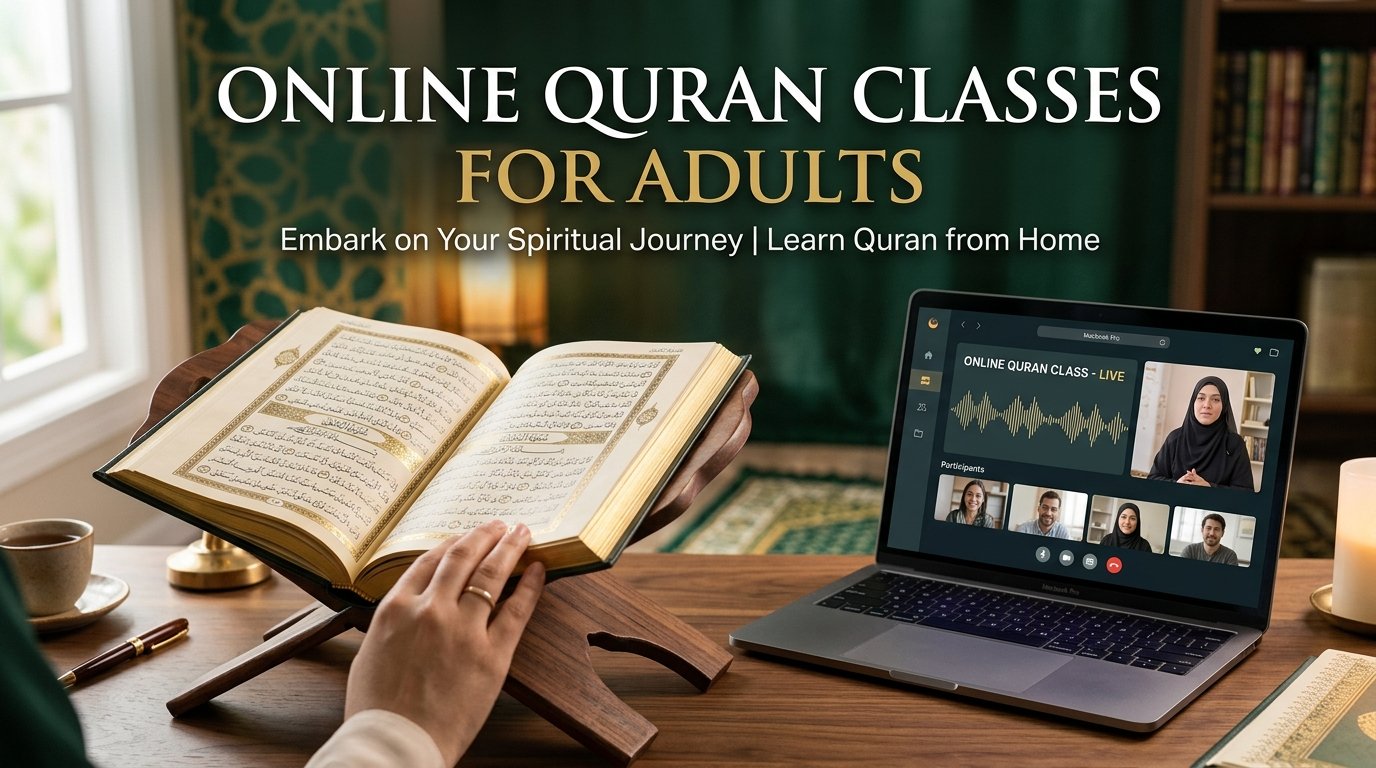
  • Best Online Quran Classes for Adults & UK/USA Students (2026 Review)

    Best Online Quran Classes for Adults & UK/USA Students (2026 Review)

    👥 ADULT EDUCATION • UK & USA 🔒 100% Confidential 1-on-1
    M. Abdullah
    By Hafiz M. Abdullah ✔ Verified Tutor
    Senior Tajweed & Adult Pedagogy Lead • Quran Learners Academy
    📅 October 16, 2026 • ⏱ 7 min read

    It is a widespread misconception that learning the Quran is strictly an activity for young children. Every week, hundreds of mature adults — university students, corporate executives, mothers, and new Muslim reverts — realize they want to recite the Quran with accuracy, confidence, and soulful depth.

    However, walking into a local neighborhood mosque where classes are packed with children can feel intimidating. Searching for the best online Quran classes for adults has transformed adult Islamic education by offering complete privacy, schedule flexibility, and dignified, mature pedagogy.

    الَّذِي يَقْرَأُ القُرْآنَ وَهُوَ يَشْتَقُّ عَلَيْهِ فَلَهُ أَجْرَانِ
    “The one who recites the Quran with difficulty, stammering or stumbling through its verses, will have twice that reward.”
    Sahih al-Bukhari • Hadith 4937

    What to Look For in the Best Online Quran Classes for Adults

    • Strict 1-on-1 Individual Sessions: No group embarrassment. You have 100% of your instructor’s attention.
    • Certified Male & Female Instructors: Dedicated female teachers for sisters and young children, male teachers for brothers.
    • UK & USA Time-Zone Compatibility: Book classes early morning (6:30 AM GMT/EST) before work, or late evening after dinner.
    • Non-Judgmental Environment: Instructors trained in adult learning psychology who understand mature student concerns.
    100% PRIVATE • 50% OFF ADMISSION

    Begin Your Private Adult Quran Journey

    Claim your 3-Day Free Trial Class with a qualified male or female tutor. No credit card required.

    Hafiz M. Abdullah

    Hafiz M. Abdullah LEAD AUTHOR

    Senior Tajweed Specialist • Ijazah Holder • Academic Coordinator

    Hafiz M. Abdullah has personally coached hundreds of adult professionals across the UK, USA, and Europe to read and memorize the Quran with confidence, clarity, and ease.

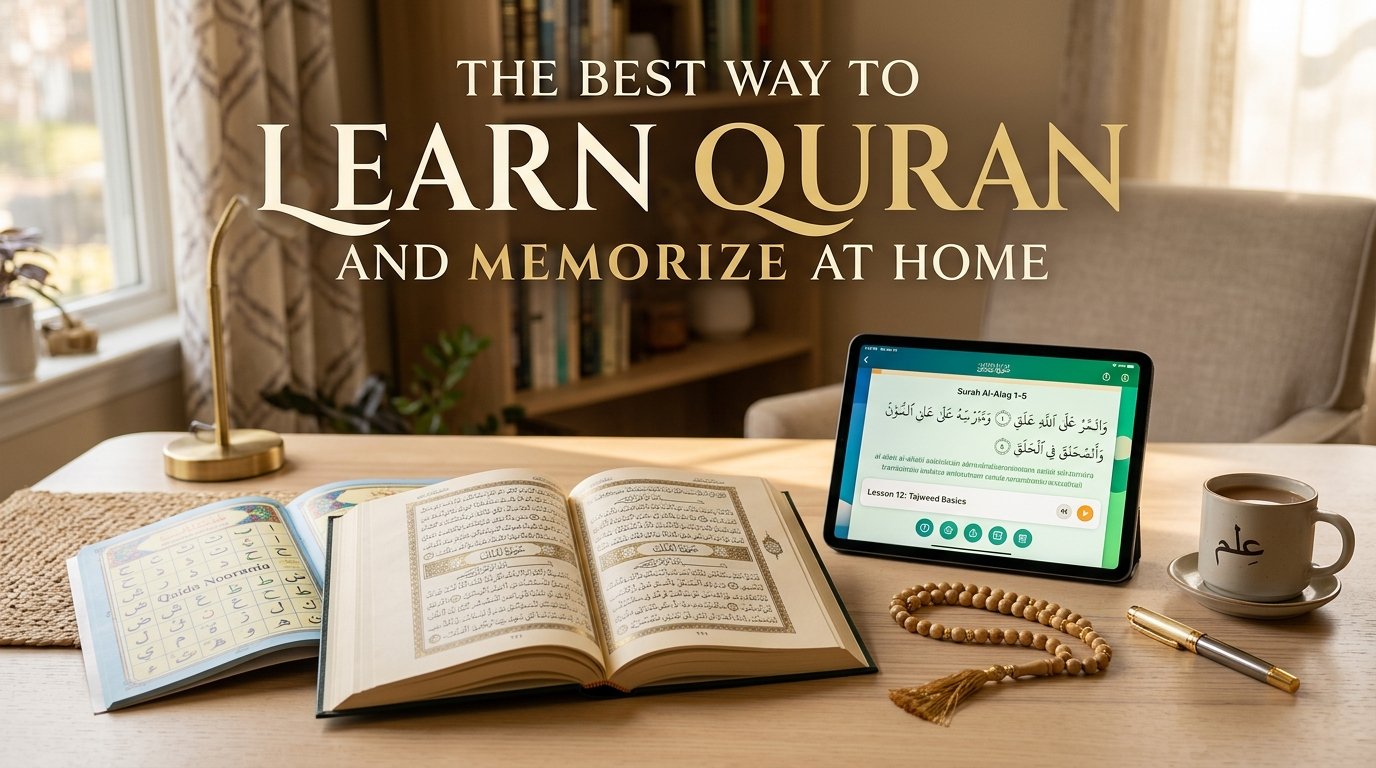
  • The Best Way to Learn Quran & Memorize at Home (2026 Step-by-Step Guide)

    The Best Way to Learn Quran & Memorize at Home (2026 Step-by-Step Guide)

    🔥 PILLAR GUIDE • STEP-BY-STEP 🏆 Tajweed & Hifz Roadmap
    M. Abdullah
    By Hafiz M. Abdullah ✔ Verified Tutor
    Senior Tajweed & Hifz Faculty • Quran Learners Academy
    📅 October 16, 2026 • ⏱ 8 min read

    What is genuinely the best way to learn Quran in 2026? Whether you are a parent introducing your child to the Arabic alphabet or an adult seeking to refine your recitation from scratch, this comprehensive guide synthesizes classical Islamic pedagogy with modern cognitive neuroscience.

    وَرَتِّلِ الْقُرْآنَ تَرْتِيلًا
    “And recite the Quran with measured, rhythmic recitation.”
    Surah Al-Muzzammil • 73:4

    The 3-Step Master Method to Learn Quran & Hifz

    1. Step 1: Noorani Qaida & Makharij: Building phonetic mastery of the 29 letters and throat origins.
    2. Step 2: Applied Tajweed Rules: Ghunnah, Qalqalah, Ikhfa, and Madd through live audio modeling.
    3. Step 3: The 3-Tier Hifz System: The best way to memorize Quran combines Sabaq (new verses), Sabaqi (recent revision), and Manzil (cumulative retention).
    50% ADMISSION DISCOUNT

    Experience the Best Way to Learn Quran Today

    Join hundreds of students across the UK, USA, Canada, and Australia. Claim your 3-Day Free Trial with certified male and female teachers.

    Hafiz M. Abdullah

    Hafiz M. Abdullah LEAD AUTHOR

    Senior Tajweed Specialist • Ijazah Holder • Academic Coordinator

    Hafiz M. Abdullah holds an authentic Ijazah in Quran recitation and Tajweed. Over 8+ years, he has mentored more than 1,200 international students worldwide.

  • The Best Tafseer of Quran in English & Best Urdu Quran Translations (2026 Guide)

    The Best Tafseer of Quran in English & Best Urdu Quran Translations (2026 Guide)

    🔥 LATEST PUBLISHED • 2026 GUIDE 📖 Tafseer & Translation
    M. Abdullah
    By Hafiz M. Abdullah ✔ Verified Tutor
    Senior Tajweed & Hifz Faculty • Quran Learners Academy
    📅 October 16, 2026 • ⏱ 9 min read

    Reciting the Holy Quran with correct Tajweed earns boundless heavenly reward. However, the Quran was fundamentally revealed as a divine book of guidance, contemplation (Tadabbur), and intellectual transformation for all humankind.

    When readers search for the best tafseer of quran or the best translation of quran in urdu, they are often confronted with dozens of multi-volume commentaries written across centuries. Which commentary provides the greatest clarity for contemporary English speakers? Which Urdu translation captures classical poetic depth? In this definitive guide, we review the foremost authorities in Quranic exegesis.

    أَفَلَا يَتَدَبَّرُونَ الْقُرْآنَ أَمْ عَلَىٰ قُلُوبٍ أَقْفَالُهَا
    “Then do they not reflect upon the Quran, or are there locks upon their hearts?”
    Surah Muhammad • 47:24

    1. Top 4 Best Tafseer of Quran in English (Detailed Review)

    If you are looking for the best tafsir of quran in english or the best english tafseer of quran, here is how the primary works compare:

    • 1. Tafsir Ibn Kathir (Abridged): The classical standard of Tafsir bi-al-Ma’thur (explaining Quran by Quran, Sahih Hadiths, and the Sahabah). Indispensable for serious students of Islamic knowledge.
    • 2. Ma’ariful Quran by Mufti Muhammad Shafi (8 Volumes): Accessible contemporary exegesis combining spiritual wisdom, jurisprudence, and answers to modern doubts. Highly recommended for family reading in the UK, USA, and Canada.
    • 3. Tafsir As-Sa’di (Taysir al-Karim al-Rahman): Exceptionally clear, thematic commentary emphasizing moral purification and Allah’s mercy. Perfect for beginners and new Muslim reverts.
    • 4. The Clear Quran by Dr. Mustafa Khattab: Highly acclaimed contemporary translation with concise explanatory footnotes that eliminate Elizabethan archaic pronouns.

    2. The Best Translation of Quran in Urdu: Classical & Modern

    For Urdu-speaking families, finding the best translation of quran in urdu or best urdu quran translation provides an emotional and linguistic connection unmatched by English:

    • Tafseer-e-Usmani: Translation by Maulana Mahmud Hasan Deobandi with insightful commentary by Allama Shabbir Ahmad Usmani. Celebrated for linguistic precision.
    • Kanzul Iman: Authored by Imam Ahmed Raza Khan Barelvi. Celebrated for exceptional poetic reverence, devotion, and safeguarding the honor of the Prophet (ﷺ).
    • Bayan-ul-Quran: By Dr. Israr Ahmed. Exceptional audio and video lectures with a sharp focus on Quranic revolutions and modern scientific insights.
    • Tafheem-ul-Quran: By Maulana Sayyid Abul A’la Maududi. Written in vivid, fluent modern Urdu explaining the Quran as a dynamic constitution for societal life.

    3. Deep Dive: “We Plan, But Allah is the Best of Planners”

    One of the most frequently searched reflections is the verse: “we plan but allah is the best of planners quran”.

    وَيَمْكُرُونَ وَيَمْكُرُ اللَّهُ ۖ وَاللَّهُ خَيْرُ الْمَاكِرِينَ
    “And they planned, and Allah planned, and Allah is the best of planners.”
    Surah Al-Anfal • 8:30

    In classical Tafseer, this verse refers to the night the leaders of Quraysh conspired secretly in Dar al-Nadwa to assassinate Prophet Muhammad (ﷺ). While human conspirators believed their tactical plan was foolproof, Allah’s divine plan intervened, orchestrating the blessed Hijrah to Madinah and establishing the Islamic civilization.

    50% ADMISSION DISCOUNT

    Study Quran Translation & Tafseer 1-on-1

    Go beyond recitation. Understand the Holy Quran verse-by-verse with certified Islamic scholars in English or Urdu. Claim your 3-Day Free Trial today.

    Hafiz M. Abdullah

    Hafiz M. Abdullah LEAD AUTHOR

    Senior Tajweed Specialist • Ijazah Holder • Academic Coordinator

    Hafiz M. Abdullah has studied classical Arabic grammar, Usul al-Tafseer, and Hadith methodologies alongside certified scholars. Over 8+ years, he has mentored more than 1,200 international students across London, Manchester, New York, Texas, Toronto, and Sydney.

WhatsApp Book Free Trial